How to Start an Airbnb Business in 2026: Costs, Steps, and the 35% Trap
A step-by-step guide to starting an Airbnb business in 2026 — real startup costs, permits, pricing, and how to avoid the mistakes that sink 35% of new hosts in year one.
Starting an Airbnb business in 2026 is more attractive — and less forgiving — than ever. Average annual income for US hosts has climbed to roughly $13,800, up 85% from 2019. At the same time, AirDNA research finds about 35% of new hosts quit or fail within their first year. The difference between the two groups is rarely the property. It's preparation: regulations checked, numbers run honestly, and operations systemized from day one.
Step 1: Check regulations before you spend a dollar
This is the step that kills more new STR businesses than any other. Many cities require short-term rental permits, and skipping that step can mean fines or losing your listing entirely. Before furniture, before photos, verify local zoning, permit requirements, stay limits, and guest caps. If your market is hostile to STRs, it's better to learn that now than after closing.
Step 2: Run the startup numbers honestly
Documented startup costs for a typical 2-bedroom unit average around $10,000, with a realistic range of $5,000–$15,000 depending on the market. For a 3-bedroom rental, a representative budget looks like:
- Furnishing — roughly $12,400 for a 3-bedroom done properly
- Initial supplies — about $1,200 (linens, consumables, kitchen basics, backstock)
- Licensing and permits — around $500, varies widely by city
- Launch marketing and photography — about $850
Then model revenue conservatively. The 2026 norm for well-run properties is 10–15% cash-on-cash return — healthy, but a long way from the 20–30% stories of the gold-rush years. If your deal only works at gold-rush numbers, it doesn't work.
Step 3: Set up the property for self-sufficient guests
Every guest question you prevent is recurring labor you never do. Install a smart lock with per-stay codes, set up a dedicated guest WiFi network, and write a clear house manual covering check-in, WiFi, appliances, parking, and checkout. The goal: a guest can complete an entire stay without messaging you once.
Step 4: Price dynamically and protect your rating
Hosts using dynamic pricing earn 15–25% more than hosts who set one nightly rate and leave it. Use PriceLabs, Beyond, or your PMS's built-in tools from day one. And treat your review score as the asset it is: 4.8+ ratings unlock Superhost status, which directly improves search ranking on Airbnb. Slow, accurate answers to guests — "let me find the WiFi password and get back to you" — are rating killers.
Step 5: Build your information system before you need it
Here's the step almost every first-year casualty skipped. From the day you launch, your business generates operational facts: door codes, WiFi credentials, utility accounts, the cleaner's number, the plumber who answers on weekends, permit renewal dates. Hosts who stash these in texts and notes apps slowly drown in their own operation — that's the 35% trap in slow motion.
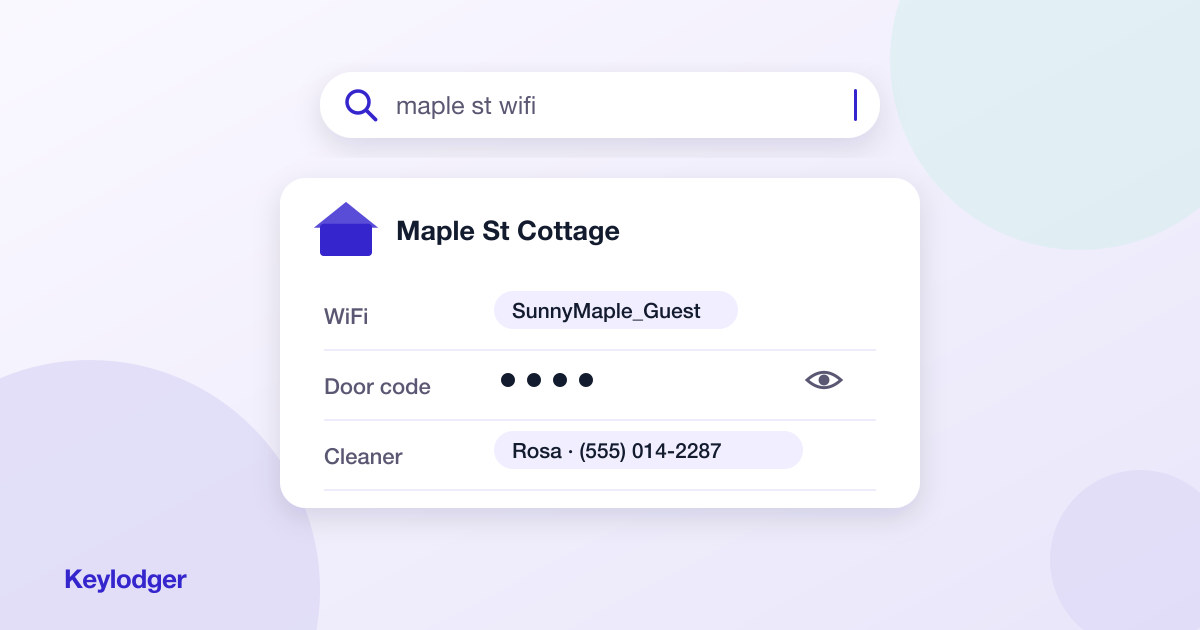
Set up a real home for this information on day one. Keylodger gives your property a structured, searchable record — access codes, WiFi, contacts, utilities, insurance, notes — with sensitive values hidden by default and one-tap copy on your phone. It's free for your first property, which is exactly when the habit matters. Use our 27-point checklist to fill it in one evening.
The honest summary
Budget $10,000–$15,000, verify regulations first, automate pricing, and build your operational systems before the chaos arrives rather than after. The 35% who fail mostly weren't unlucky — they were unprepared. Eighteen months from now, you'll either be a host with systems or a cautionary statistic. The choice happens this week, not next year.