How Real Estate Investors Track Utilities, Insurance, and Property Records
A practical system for real estate investors to track utility accounts, insurance policies, contractor history, and property records across a growing portfolio.
Real estate investing produces two kinds of records. Financial records — rent rolls, P&Ls, depreciation schedules — get plenty of attention; your accountant insists. But operational records — utility accounts, insurance policies, contractor history, access details — usually live nowhere in particular. Investors who can quote their cash-on-cash return to two decimals will spend twenty minutes hunting for a water utility account number.
The moments it costs you
- The vacancy flip — utilities back into your name: three providers, three account numbers, three support lines, none at hand
- The insurance claim — adjuster on the phone wanting your policy number while you dig through email attachments from two renewals ago
- The contractor callback — the furnace fails; was it serviced under warranty last year? By whom? Paper trail: a text thread you can no longer find
- The refinance or sale — lender wants insurance, HOA, and utility documentation per property; you lose a weekend reconstructing it
- Tax season — see all of the above, simultaneously
Why the usual homes for this data fail
Accounting software tracks money, not facts — QuickBooks has no field for "breaker panel is in the detached garage." Email is where records go to be technically-retrievable-but-practically-lost. And the portfolio spreadsheet degrades with every door you add: stale rows, sideways scrolling, zero security for anything sensitive.
The structure that works
Organize by property, not by document type. Each property gets one record holding its operational life:
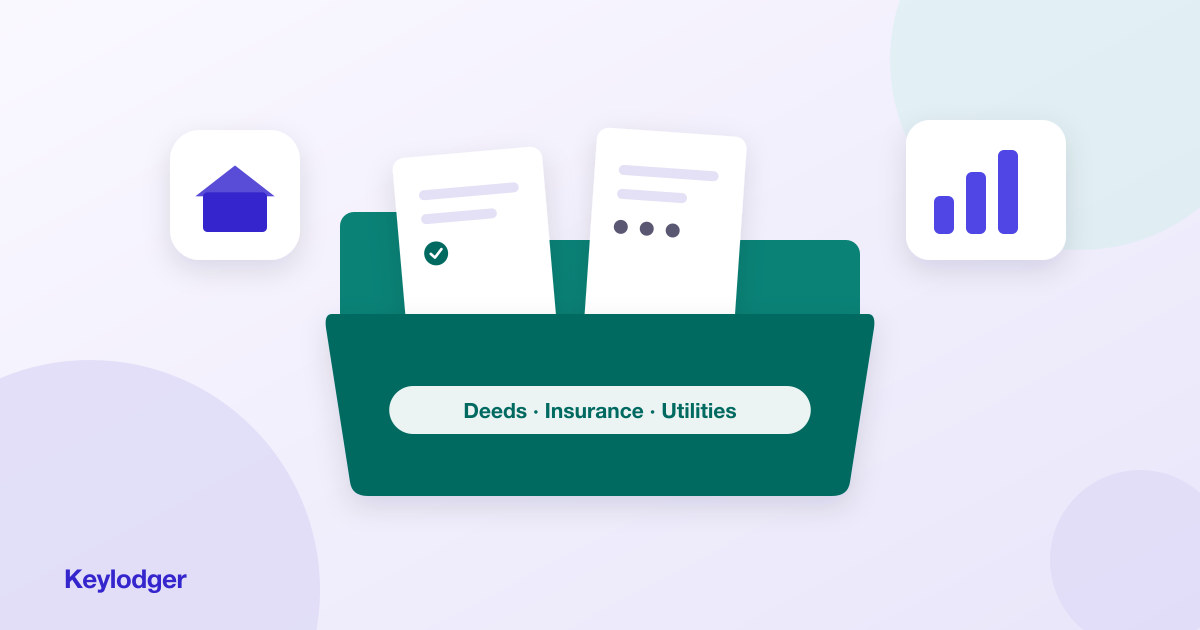
- Utilities — provider, account number, support line for electric, gas, water, trash, internet
- Insurance — carrier, policy number, agent contact, premium, renewal date
- Compliance — permits, registrations, HOA contacts and dues
- Vendors — every contractor with a note on what they did and when
- Physical details — shutoffs, panels, roof age, appliance models, access codes
Then make it searchable across the portfolio, because real questions cut across properties: "which properties renew insurance this quarter?" "who was the roofer on the duplex?" Folder hierarchies can't answer those; search can.
Keylodger gives investors exactly this: a structured record per property, flexible sections for whatever you track, portfolio-wide search, and masked-by-default handling for anything sensitive — account numbers, codes, logins. It's the operational complement to your accounting stack: one tracks the money, the other answers every other question in seconds.
Operational organization compounds exactly like the asset does. Set up the system at three properties and adding the tenth is routine; skip it, and the tenth property is the one that breaks you at tax time.